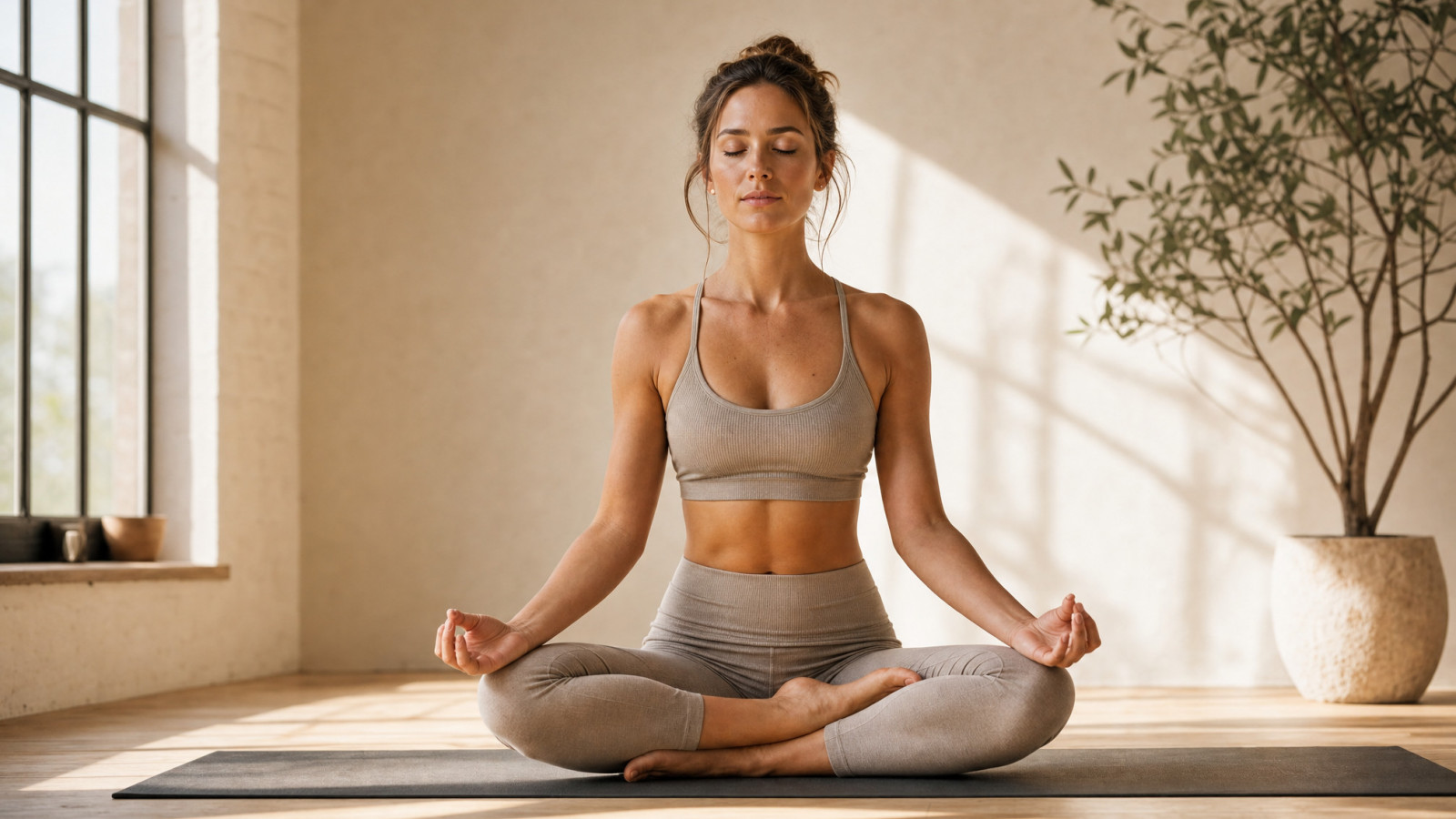
“Let’s find our center.” This phrase often opens a yoga class — but what does it truly mean to become centered?
Physically, it begins with the hands drawing together at the heart in Anjali Mudra, the prayer position. We can deepen the sense of our midline by gently hugging the shins inward — not forcing them together, but inviting an energetic draw toward the body’s center. Closing the eyes is part of this too: a single deep, releasing breath, followed by slow, deliberate breathing in and out through the nose.
Throughout the day we are pulled in many directions, the mind scattered across a dozen small urgencies. Coming to our center is a way of gathering ourselves back — calling our attention home to the body, and our energy toward a single point of stillness. With the eyes closed, the gaze turns inward and slightly upward, and the mind is given permission to set its distractions down.
As a nurse, I have seen how quickly the body settles once the breath slows and the shoulders release — the nervous system reading these small cues as safe. Centering works the same quiet way. It is less a technique to perfect than a returning we can practice: at the start of a class, yes, but also at a red light, before a difficult conversation, or in the pause before sleep.
This is the gift of centering — that it asks for nothing but a breath and a moment of attention. Inward focus, steady breath, a grounded body and a soft gaze, together, carry us toward clarity and calm. Wherever the day has scattered you, your center is always waiting to be found again.
— Lisa Wulf, RN


